
- Published on
Why is My Monstera Albo Turning Brown? (And How to Fix It)
- Authors
- Name
It’s every variegated plant owner’s worst nightmare. You spent months searching for the perfect Monstera Albo, you invested a significant amount of money, and for a few weeks, it was perfect.
Then, you see it. A small, crispy brown spot in the middle of a pristine white sector. The next day, it’s bigger.
First, take a deep breath. You are not a bad plant parent.
Browning (necrosis) on high-variegation plants is the #1 complaint in the aroid community. In this guide, we’re going to move beyond the generic advice of "don't overwater" and dive into the biological reasons why Albos turn brown—and the specific, actionable steps you can take in 2025 to stop it.
The "Parasite" Problem: Understanding Variegation
Before we fix the brown spots, we need to understand why they happen.
The white parts of your Monstera Albo are beautiful, but biologically, they are "parasitic." They contain no chlorophyll, meaning they cannot produce energy from light. They rely entirely on the green parts of the leaf to generate sugars and sustain them.
When your plant experiences any stress—whether it's a draft, a missed watering, or a repotting shock—it goes into survival mode. The plant’s logic is simple: "I cannot support these freeloading white cells anymore." So, it cuts off nutrients to the white sectors, causing them to brown and die to save the rest of the plant.
The Fix? Minimize stress and maximize energy. Here is your diagnostic checklist.
Cause #1: Root Rot (The Silent Killer)
If the browning is soft, mushy, or dark brown/black (rather than crispy and light brown), you likely have a root issue.
Monstera Albos grow slower than regular Monsteras because they have less chlorophyll. This means they drink water slower. If you water them on the same schedule as your all-green Monstera, the soil stays wet too long, suffocating the roots.
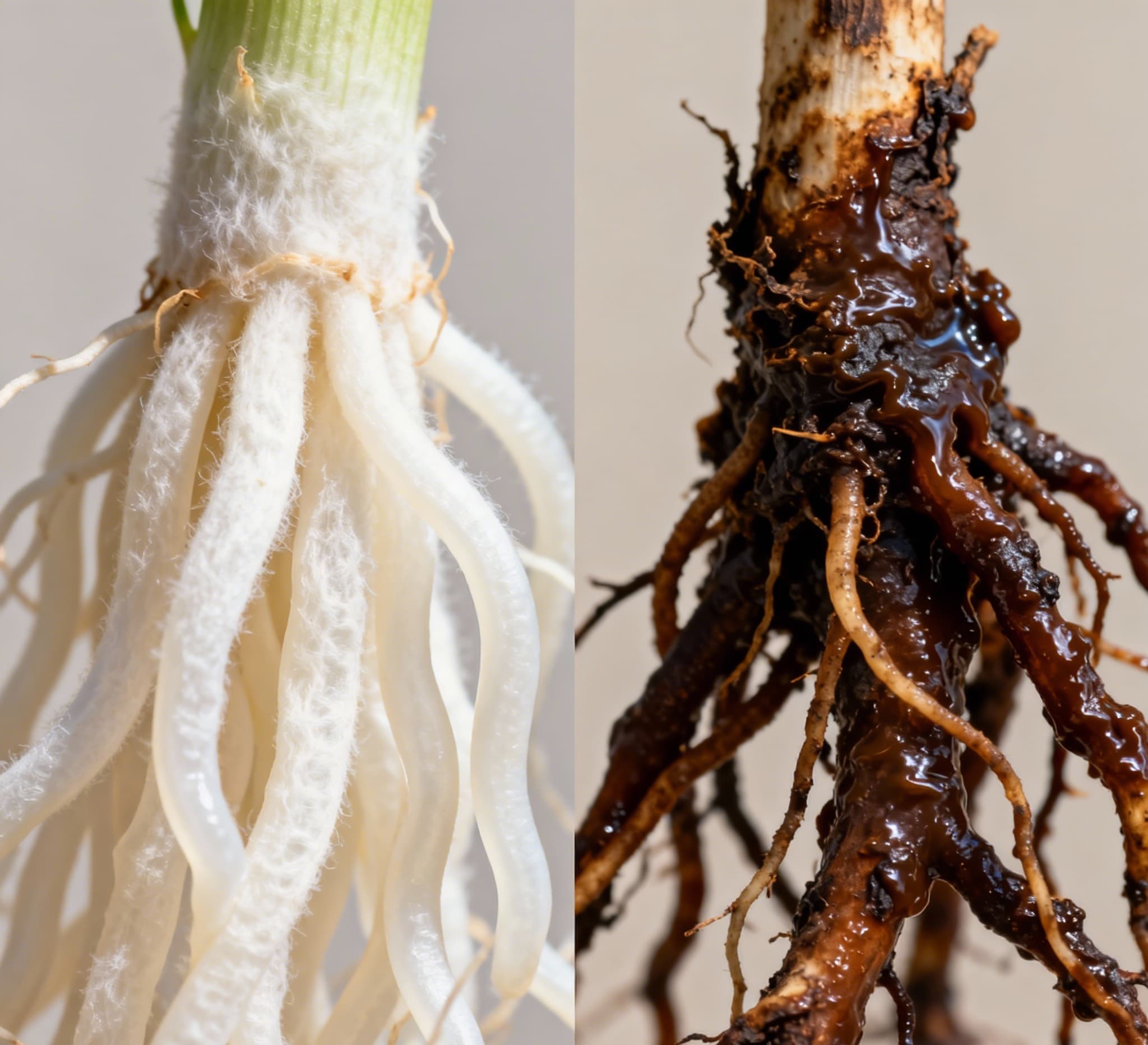
The Solution:
- The Smell Test: Bring the pot to your nose. Does it smell like damp forest floor (good) or a swampy sewer (bad)? Swampy means rot.
- Check the Soil: Ensure you are using a Chunky Aroid Mix (Bark, Perlite, Coco chunks). If you are using dense potting soil, you must repot immediately.
- Use a Moisture Meter: Never water on a schedule. Only water when the meter reads 3-4 (approaching dry) or when the pot feels significantly lighter.
Cause #2: The "Silica" Deficiency (2025 Pro Tip)
If you browse Reddit or plant forums in 2025, you’ll see one word repeated constantly: Silica.
Most standard fertilizers (NPK) do not contain silicon. However, for variegated plants, silicon is a game-changer. It acts as the "cement" between cell walls. Since the white parts of your Albo have weaker cell structures, they are prone to mechanical damage and melting.
How Silica Helps:
- Strengthens Cell Walls: It makes the white leaves tougher and less likely to brown from minor humidity fluctuations.
- Prevents "Melting": It helps the plant retain water in those delicate white sectors.
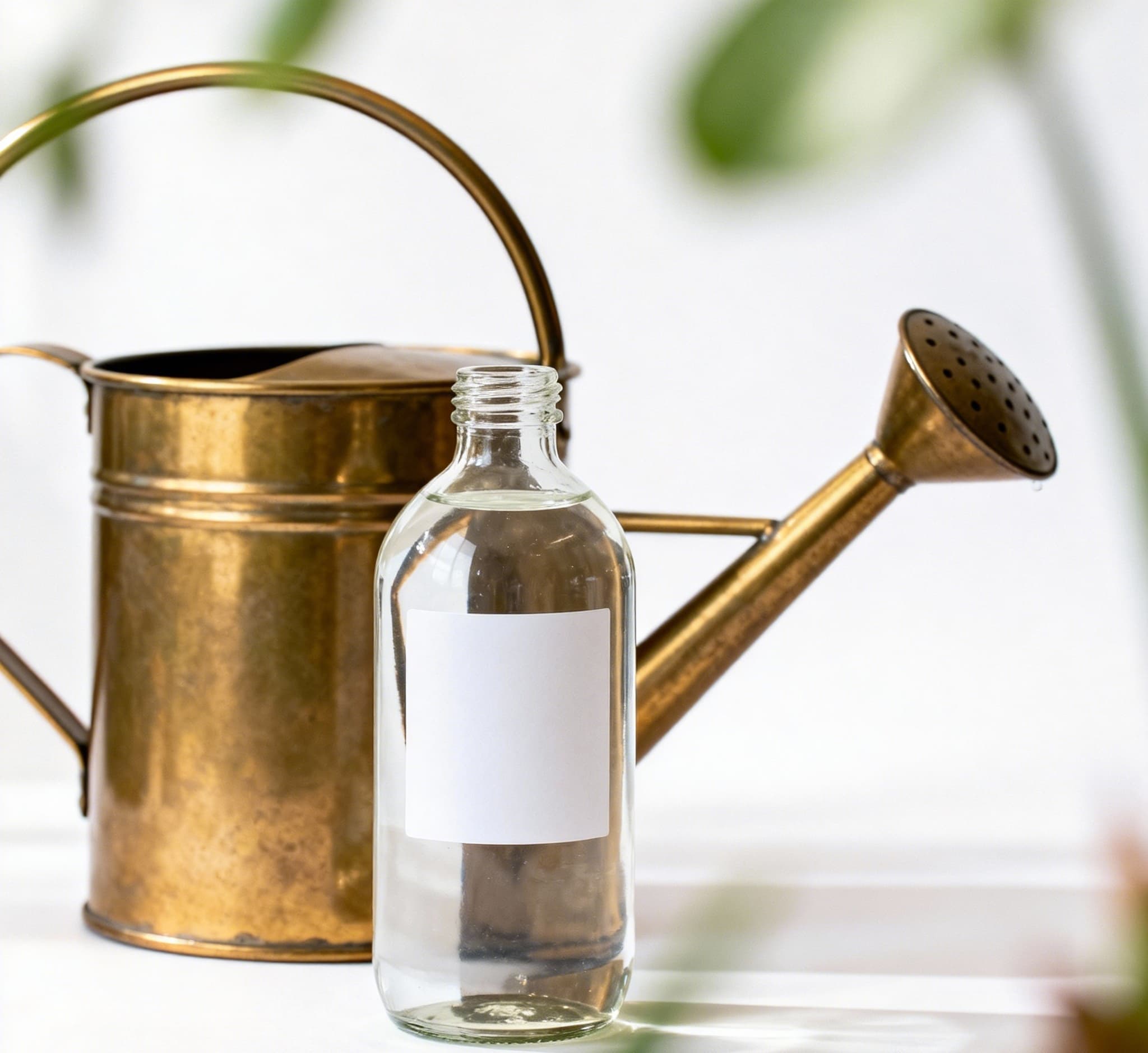
The Protocol:
Add a liquid Silica supplement (like Alchemist Stout or Dyna-Gro Pro-TeKt) to your water every time you water.
Important: Add Silica to the water first, wait 20 minutes for it to bond, and then add your regular fertilizer. If you mix them together instantly, they can lock out nutrients.
Cause #3: Inconsistent Watering (Edema)
Do you let your Albo dry out completely bone-dry, and then flood it with water? This "feast and famine" cycle causes Edema.
When a dry plant suddenly takes up too much water, the cells in the white sections can burst from the pressure. These burst cells eventually turn brown and rusty looking.
The Solution:
- Consistency is key. Try to keep the substrate "lightly moist" rather than oscillating between "swamp" and "desert."
- Self-Watering Pots: Many Albo growers in 2025 are switching to self-watering setups (using Pon or Leca) to ensure a consistent moisture level without the risk of overwatering.
Cause #4: Thrips (The Invisible Enemy)
If your browning looks like tiny rusty scratches or greyish-silver patches before turning brown, you have Thrips.
Thrips love Monsteras. The larvae are pale yellow or white, making them almost invisible against the white variegation of an Albo.
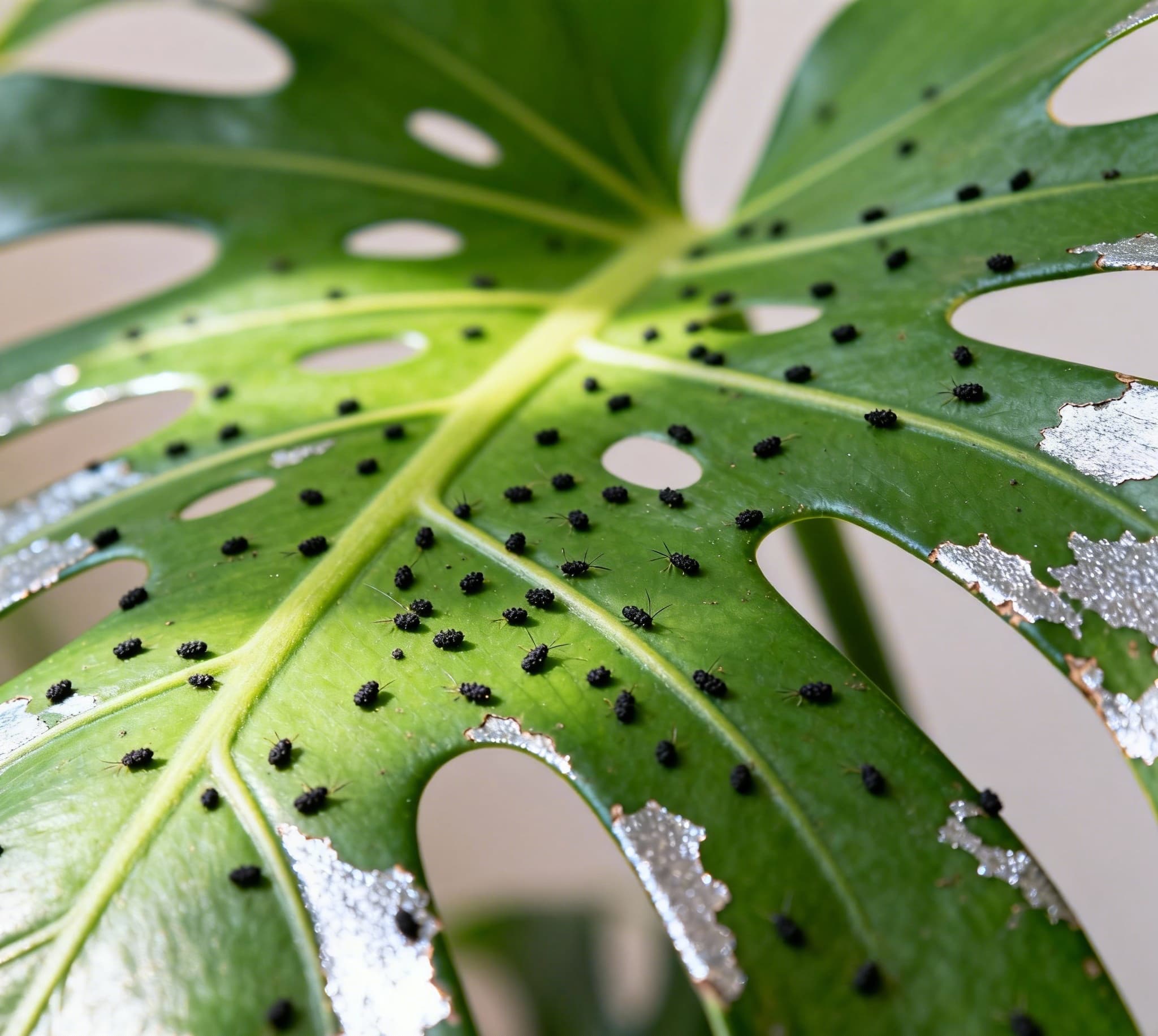
The Solution:
- The Blue Sticky Trap: Thrips are attracted to blue. Hang one near your plant to monitor.
- Systemic Granules: Since thrips lay eggs inside the leaf tissue, sprays often miss them. Bonide Systemic Granules (Imidacloprid) applied to the soil is the most effective way to protect expensive Albos.
How to "Surgically" Remove Brown Spots
So, the damage is done. You have a brown, crispy edge. Should you cut it?
Yes, for aesthetic reasons, but you must do it correctly to prevent it from spreading.
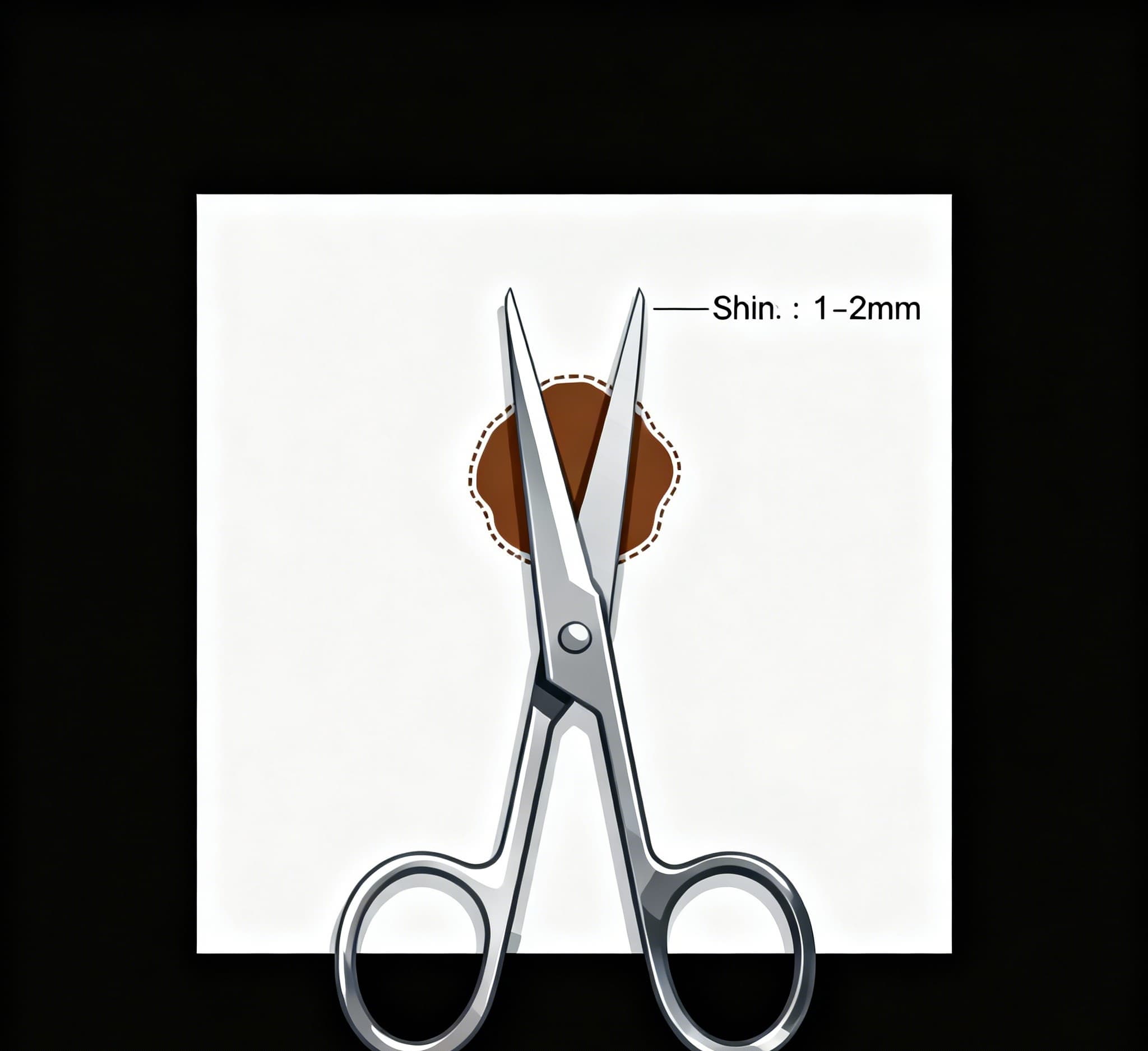
- Sterilize: Wipe your scissors with alcohol.
- The Margin Rule: Do NOT cut into the healthy green/white tissue. If you cut into live tissue, you open a fresh wound, and the plant will brown further back to seal that wound.
- Leave a Line: Always leave a thin, 1mm line of the dead brown tissue. This acts as a sealed buffer for the healthy leaf.
Summary: The Anti-Browning Checklist
If your Monstera Albo is browning, run this diagnostic immediately:
| Symptom | Likely Cause | Immediate Action |
|---|---|---|
| Mushy/Black Spots | Root Rot | Check roots, repot into chunky mix, use peroxide. |
| Crispy Brown Edges | Low Humidity / Dehydration | Increase humidity (humidifier, not misting), add Silica. |
| Rusty/Silvery Patches | Thrips | Check undersides of leaves, apply Systemic Granules. |
| Random Spots in White | Silica Deficiency / Light Stress | Move slightly further from grow light, start Silica regime. |
Found this guide helpful? Check out our previous post on Monstera Albo Care Guide: 2025 Edition to master the basics of light and soil.